
What is digital transformation?
Digital transformation is the move from paper-based and legacy processes to integrated digital systems and services. For public-sector organisations, it means faster service for citizens, reliable records and a real-time view of operations.
What we deliver
Process digitisation
Paper forms and booklets replaced by digital workflows and records.
- Workflow design
- Digital forms
- Official numbering
- Printable documents
Field & mobile apps
Apps for staff who work in the street or on site.
- Works offline
- Portable printing
- Camera and GPS
- Managed devices
Management dashboards
A real-time view of operations for managers and staff.
- Search and filters
- PDF and Excel exports
- Maps
- Roles and permissions
Citizen portals
Public services that citizens can use without an account.
- Simple lookups
- QR-code access
- Privacy protections
- Mobile-friendly
Systems integration
New systems connected to your existing data and processes.
- APIs
- Data migration
- Single sources of truth
- Reporting
Records & audit trails
Records that cannot be quietly changed, with a full history.
- Append-only records
- Complete action logs
- Data separated per organisation
- Independent backups
Principles for public-sector systems
Arabic first
Right-to-left interfaces designed for Arabic from the start.
Privacy
Data separated per organisation, with role-based access.
Records that cannot be altered
Every action is recorded; nothing is silently edited or deleted.
Works offline
Field work continues when the connection drops.
How a transformation project runs
-
Understand the field
We observe how the work is done today and where paper or old systems fail.
-
Design the system
Clickable prototypes reviewed with the people who will use them.
-
Build & pilot
Build, test and pilot one module at a time.
-
Roll out & support
Training, rollout, monitoring and continuous improvement.
Related project
Baladiya360
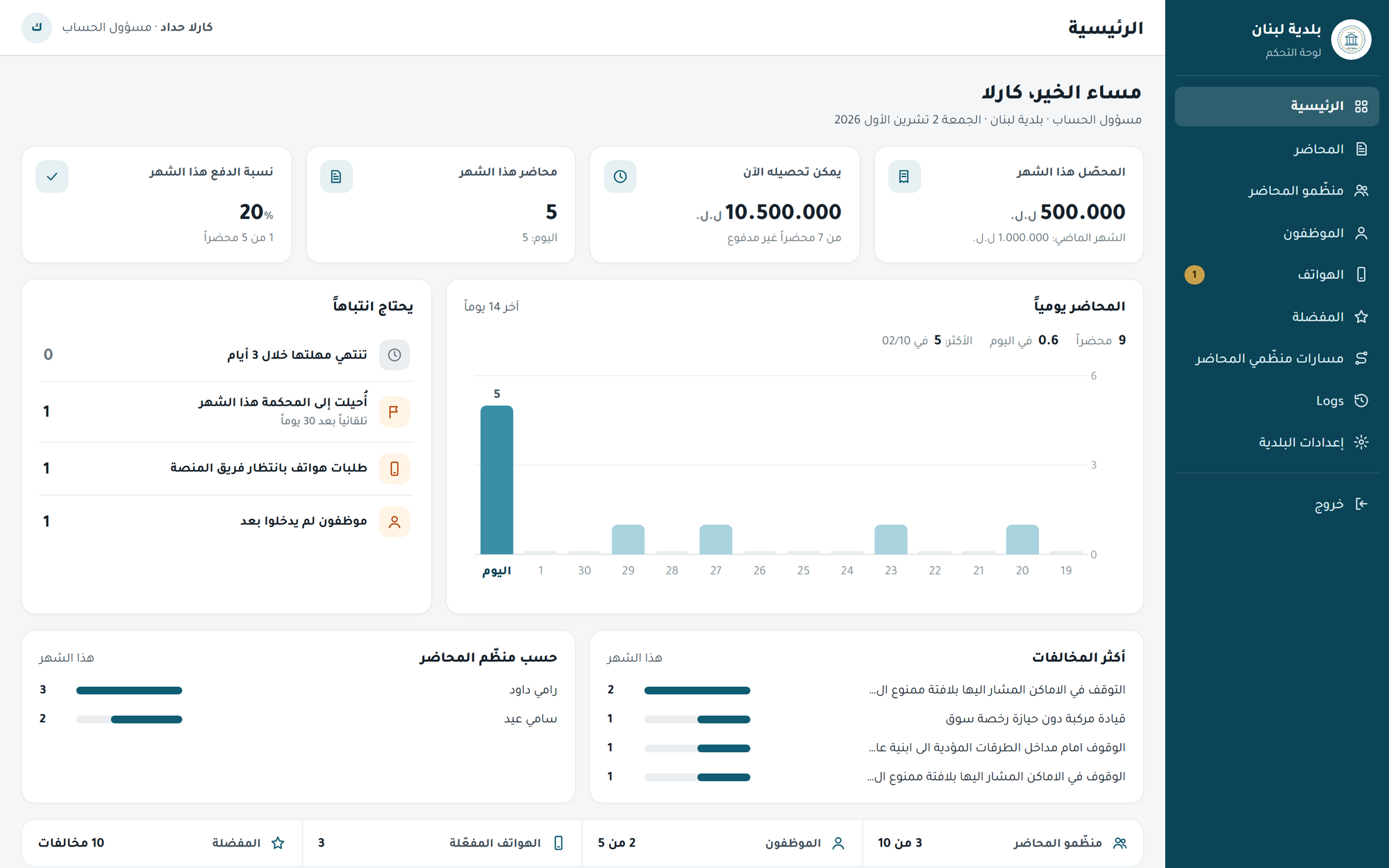
An integrated management system for Lebanese municipalities and their unions. Its first module replaces paper traffic-ticket booklets: officers issue and print tickets on a phone, even offline; the municipality follows them on a dashboard; citizens check them online.
Frequently asked questions
What is Baladiya360?
Baladiya360 is an integrated management system for Lebanese municipalities and their unions. Its first module replaces paper traffic-ticket booklets: officers issue and print tickets on a phone, the municipality follows them on a dashboard, and citizens check them online.
Can these systems work without an internet connection?
Yes, where the work requires it. The Baladiya360 officer app, for example, issues and prints tickets offline and uploads them when the connection returns.
How is citizens’ data protected?
We design for privacy from the start: data is separated per organisation in the database itself, access is role-based, and every action is logged.